

[vc_row][vc_column][vc_video link=”https://vimeo.com/473740137″][vc_video link=”https://vimeo.com/473783042″][vc_column_text]Ships earn their revenue from the cargo they carry – bulk cargoes, containers, liquids, vehicles, break-bulk cargoes, heavylift cargoes, and others. In every case, careful planning prior to loading or discharging the cargoes is essential.
Cargo Stowage
Much of the stowage of cargo is planned by computer, but the following factors have to be taken into account when compiling cargo stowage plans :
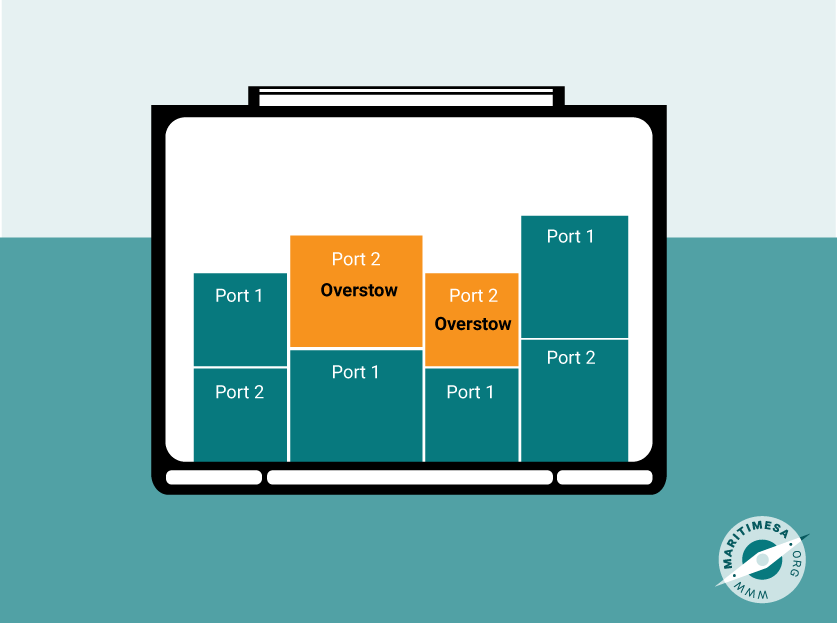
Port Rotation is the order in which a ship will call at a series of ports, e.g. Rotterdam, Cape Town, Port Elizabeth, and Durban. Cargo has to be loaded with this in mind. For example, if a ship has the port rotation given above, the cargo stowage planners must ensure that cargo for Cape Town cannot be stowed below cargo for Port Elizabeth or Durban. If they do stow Cape Town cargo below any Port Elizabeth cargo, they will have to discharge the Port Elizabeth cargo when the ship arrives in Cape Town, then discharge the Cape Town cargo and re-load the Port Elizabeth cargo. This uses extra time, and in shipping, time costs money. Of course, a tariff has to be paid per cargo lift.
Cargo that is stowed below other cargo for a later port (e.g. Cape Town cargo below Port Elizabeth cargo) is known as an overstow.
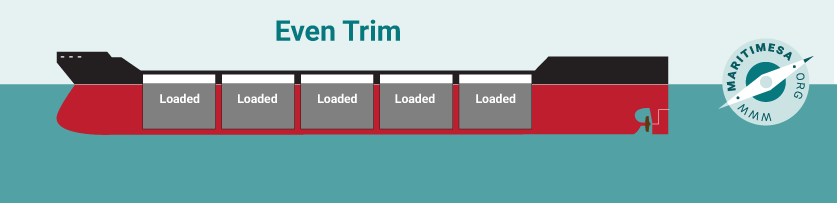
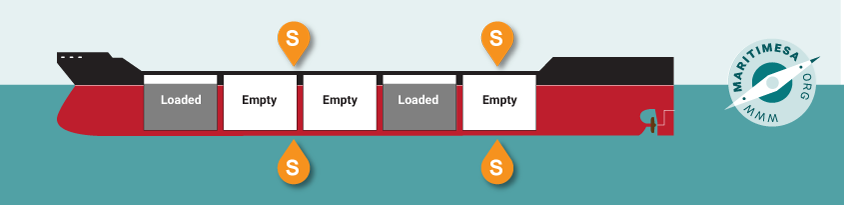
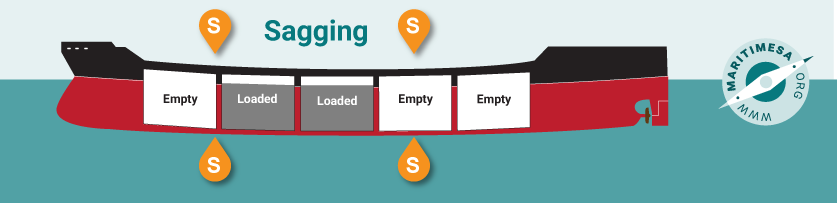
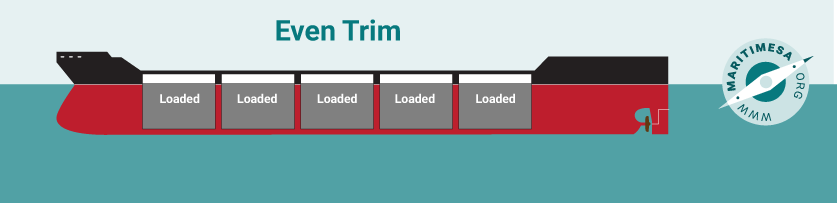
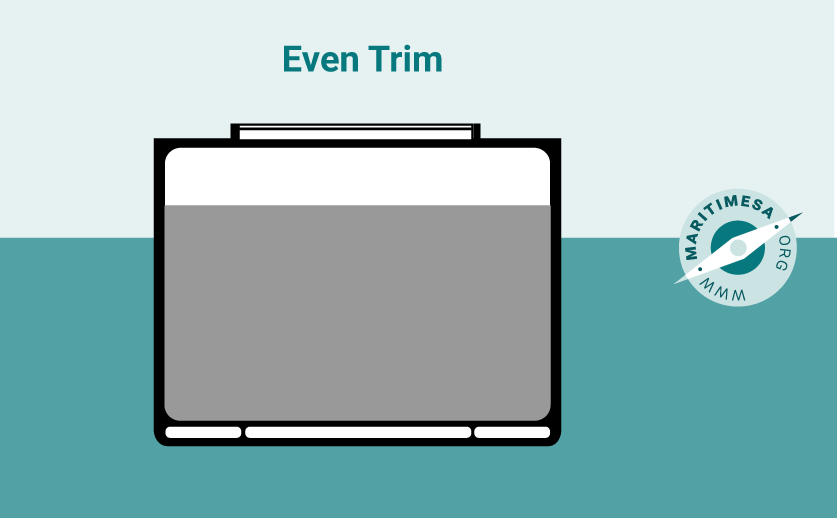
Stresses on the ship (S) should be kept to a minimum. Therefore cargo should be spread throughout the ship according to its weight – if possible. (A ship where the weight is spread evenly throughout the ship will have an even trim – or a nearly even trim.) Sometimes this is not possible because of other factors (e.g. port rotation, stowage of heavylift cargoes, etc), and careful ballasting of the ship will be necessary. However, as a rule, ship cargo stowage planners try to spread cargo throughout the ship.
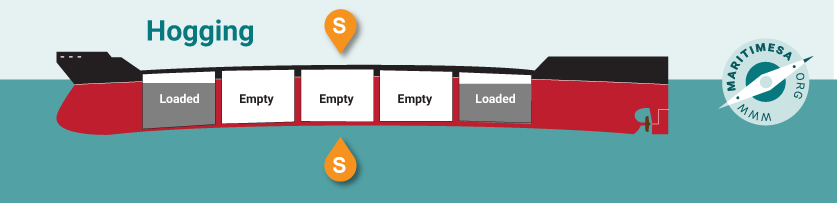
Hogging or sagging (see diagrams) is avoided by better distribution of cargo throughout the ship.
Where a ship goes to one port and discharges a significant amount of cargo, stresses on her hull can occur when she goes to the next port – with some empty or near-empty holds – to discharge the rest of her cargo. Careful ballasting can help to solve this problem, and some ships are designed to have some holds empty of cargo.
When loading longer ships (e.g. Capesize bulk carriers), the cargo is generally loaded in a special sequence – see the example of a sequence below when loading a Capesize vessel with only one shiploader.
Load Hold 5 – then half-load Hold 3 – then half-load Hold 7 – then half-load hold 2 – then half-load Hold 8 – then load Hold 1 – then half-load Hold 4 – then half-load hold 6 – then load Hold 9. Thereafter, the shiploader will complete loading the holds in the same order given.
Such a loading sequence is important to avoid undue stress on the hull of the ship while loading. Obviously, ballasting is important to counter the stresses that build up during loading.
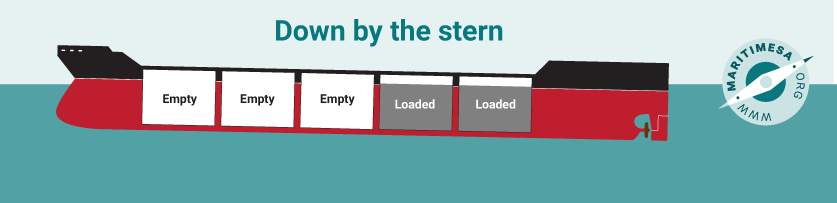
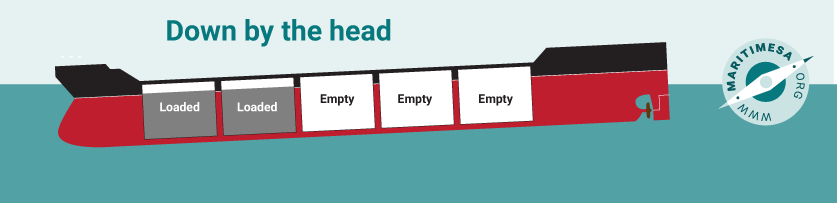
Stability is important for any ship proceeding to sea, and, again, careful ship cargo stowage planning and ballasting are important to achieve as even a trim as possible.
A ship that is down by the stern (the stern is far deeper in the water than the bow) is vulnerable to being over-run by a stern sea, and wind on the side of the bow can affect steering.
A ship that is down by the head (the bow is far deeper in the water than the stern) can suffer damage to the fo’c’sle or even hatchcovers to hold 1 or hold 2 in a head sea. In addition, if the stern is well out of the water, the propeller and rudder become less effective, and the propeller can vibrate badly if exposed above the water.
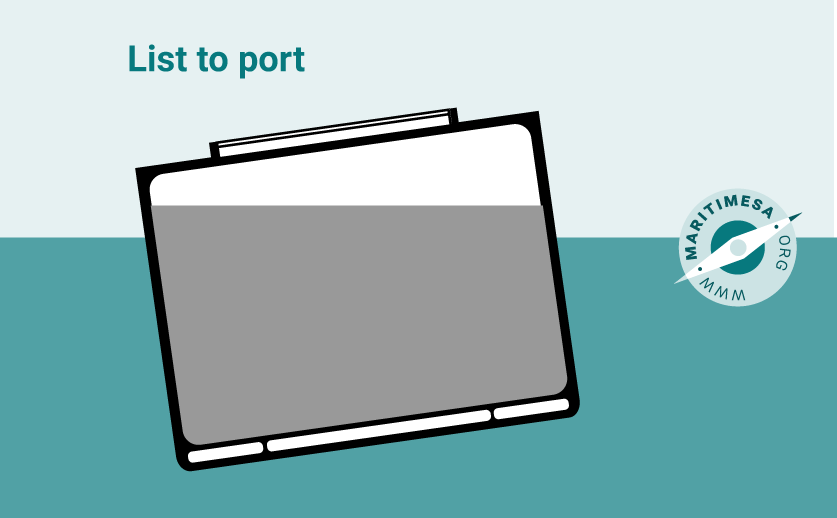
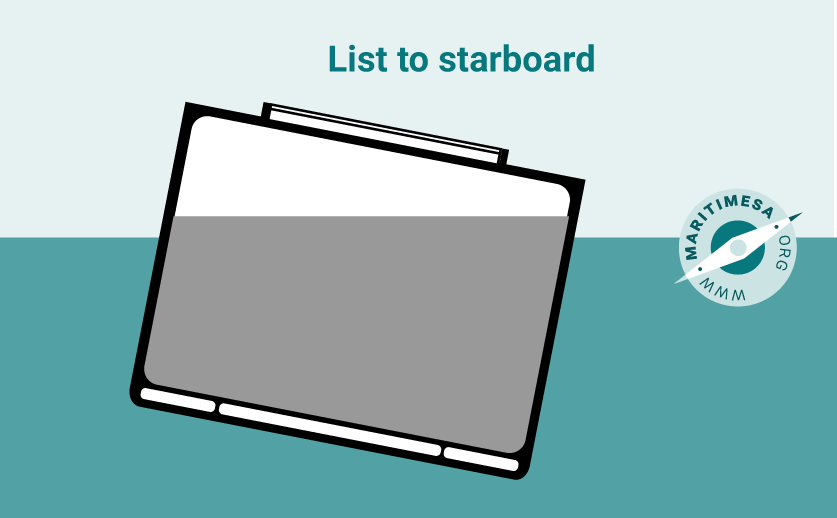
A ship with a serious list (where she “leans” towards the port side or the starboard side) will roll awkwardly in heavy seas, and this can lead to the cargo shifting and/or the ship capsizing.
Therefore, proper cargo stowage and ballasting can usually rectify these problems.
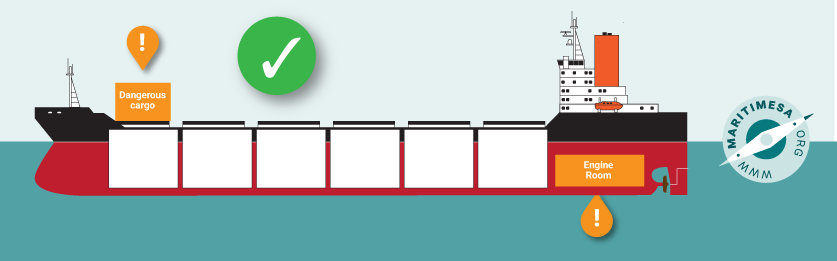
Dangerous cargoes, those that are flammable, toxic and/or corrosive, need special care and bear special labels with codes that indicate the category of the contents and treatment should anything go wrong. To avoid exposure to excessive heat, these cargoes are usually stowed on deck, away from the accommodation and engineroom.
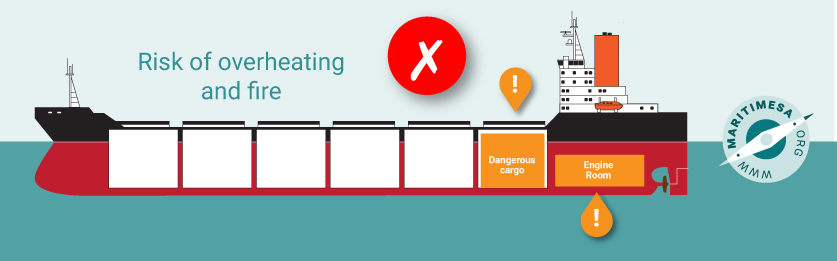
Non-compatible cargoes cannot be loaded in the same compartment or in the same container because if they combined, they could cause a fire or give off toxic fumes or present other problems. It could be that one type of cargo will affect the other in terms of smell, e.g. animal hides or fishmeal cannot be stowed in the same hold or in the same container as rolls of textiles or bags of grain.
Heavy lifts are items that are unusually heavy such as machinery, mining equipment, railway locomotives or bulldozers. They are stowed either on deck or in the hatch square, the area directly below the hatch. This allows them to be lowered directly to the place of stowage. When being discharged, the heavylift cargo can be hoisted directly out of the hatch without any sideways movement of the cargo, which is difficult to do.
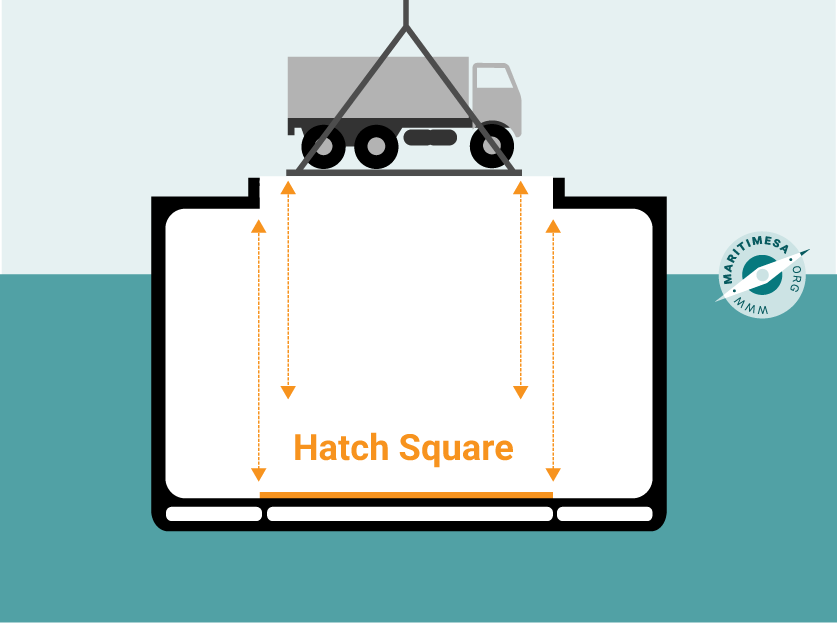
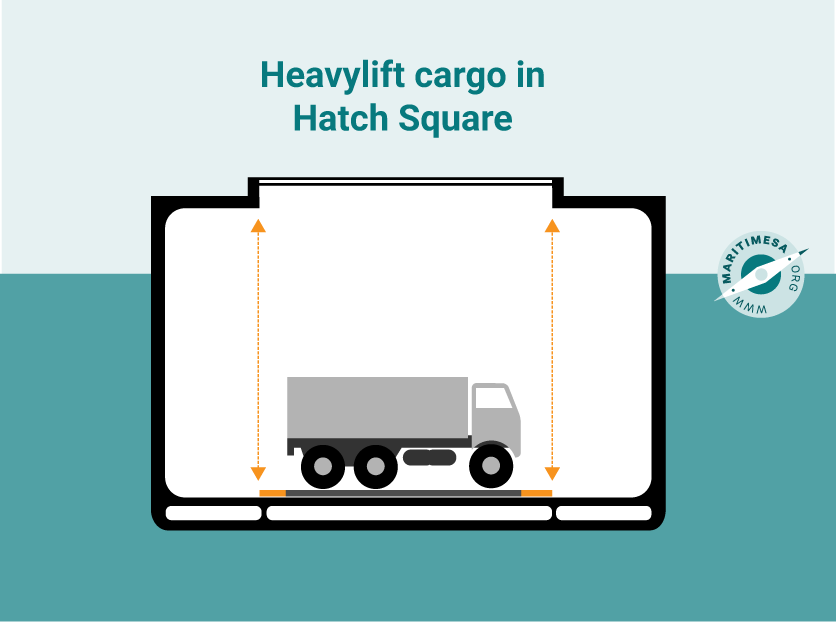
Cargo handling equipment needs to be of adequate power to lift a piece of heavy cargo. The safe working load of a crane (e.g. SWL 20t) is the limit of the crane’s lifting capability. Any cargo that is less than the crane’s safe working load can be stowed on deck within reach of that crane or in a hold served by that crane. Some ships have cranes that can work in tandem. This means that they are specially designed to operate together to lift heavier items, e.g. two cranes with SWL 20t can lift 40 tons when working in tandem.
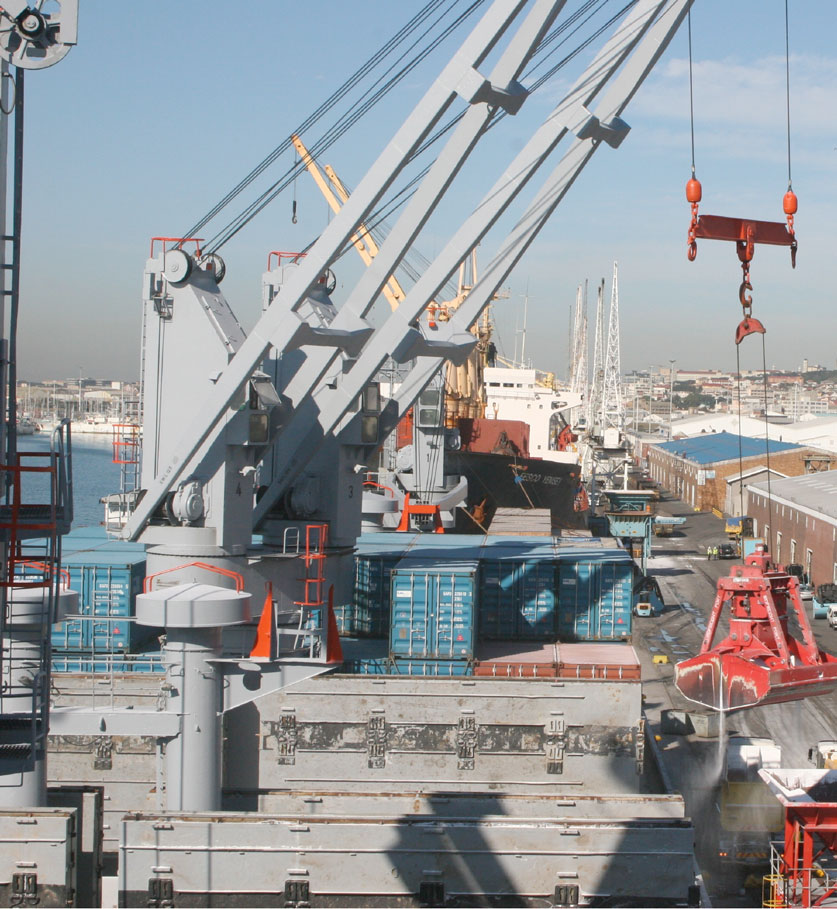
These two cranes are designed to work in tandem and to lift double their normal safe working load. Photograph : Brian Ingpen

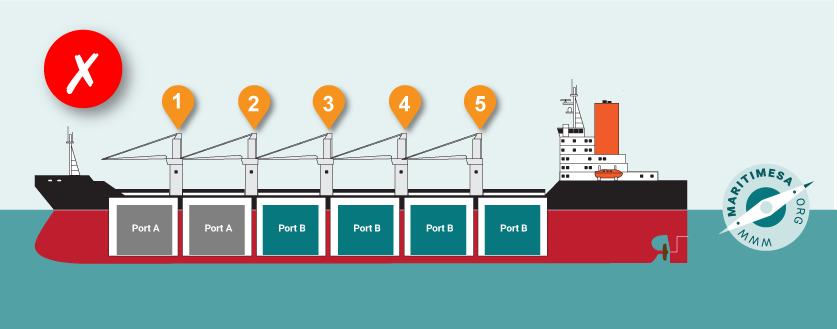
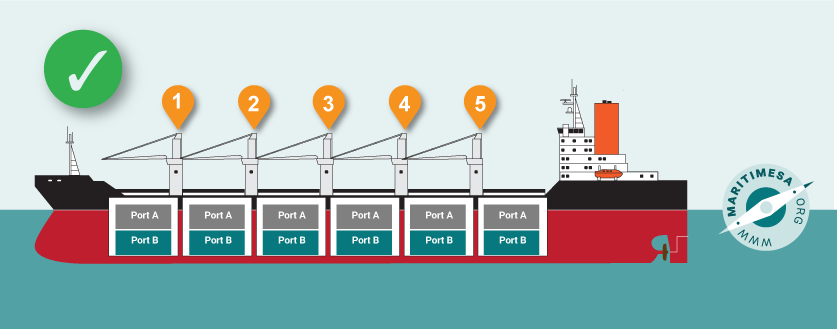
Accessibility to cargo by cranes. Cargo stowage planners prefer to spread the cargo for one port in more than one hold. If the cargo for one port is concentrated in one or two holds, only one or two cranes can work at a time. If the cargo for one port is spread through more holds, more cranes can work the cargo at the same time. This means that cargowork can be completed more quickly and the ship will spend less time in port.
 [/vc_column_text][/vc_column][/vc_row]