

[vc_row][vc_column][vc_video link=”https://vimeo.com/473795701″][vc_column_text]Most ships have a conventional engine that propels the vessel, and several generators that provide electricity for the variety of electrical and electronic machinery and equipment.
Some ships do not have a main engine but several generators that produce electricity to drive electric motors that propel the ship. Electricity is also used for the ship’s electrical machinery and electronic equipment.
Larger ships use the following fuel :
- Heavy Fuel OIL (HFO) is used in the ship’s main engine. HFO comes in various grades depending on the ship’s engine:
- IFO 380- Intermediate fuel oil with a maximum viscosity of 380 Centistokes (<3.5% sulphur)
- IFO 180- Intermediate fuel oil with a maximum viscosity of 180 Centistokes (<3.5% sulphur)
- LS 380- Low-sulphur (<1.0%) intermediate fuel oil with a maximum viscosity of 380 Centistokes
- LS 180- Low-sulphur (<1.0%) intermediate fuel oil with a maximum viscosity of 180 Centistokes
- Marine Gasoil (MGO a more refined product is used in the main engine of some ships, and/or in generators that produce electricity for the variety of uses aboard a ship, such as electronic systems, lighting, pumps, cranes, air conditioning, winches, refrigeration, opening and closing of hatchcovers, and other uses of electricity.
- Marine Diesel Oil (MDO) is used in ships’ generators.
- Lubricating Oil (“Lubes”) comes in various grades and is used to lubricate machinery on the ship.
Ships bunker from bunker points in the wharf or from bunker barges or from road tankers although these can deliver relatively small amounts at a time.
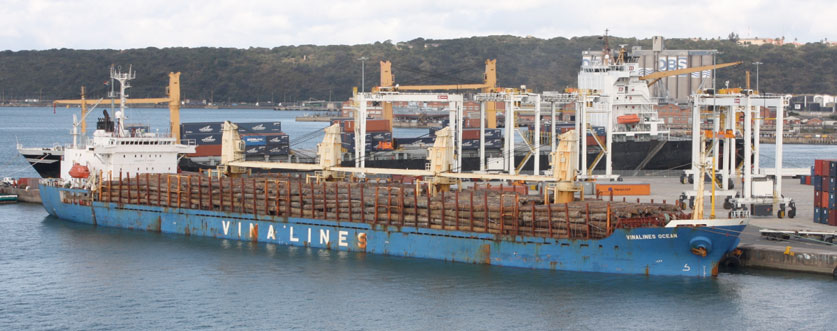
A log carrier bunkering in Durban during a voyage from West Africa to Asia. Photograph : Brian Ingpen
In some sheltered anchorages, ships bunker from bunker barges (or other small tankers) while at anchor. This operation is called ship-to-ship bunkering, Singapore, for example, is a major ship-to-ship bunker port. Some ship-to-ship bunkering occurs in Algoa Bay and occasionally, in the lee of Robben Island or in St Helena Bay. Great care must be taken to avoid accidents while undertaking ship-to-ship bunkering to ensure that no pollution occurs.
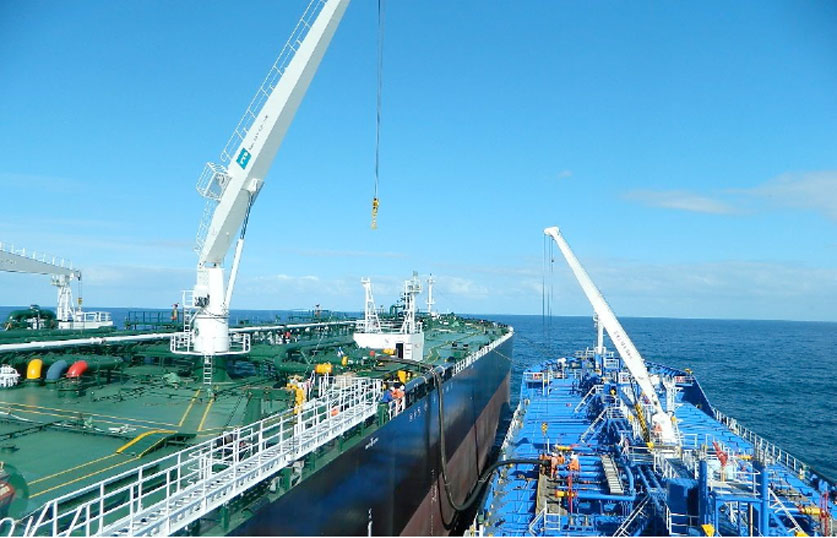
Ship-to-ship bunkering operation off the Mozambique coast. Photograph : Paulette Mswanganya
Bunkering is a very important industry, and owners often buy large volumes of bunkers from suppliers to gain a lower price. Careful calculations are also made to determine where a ship should bunker. Factors such as bunker price at various ports (e.g. the loading port or a port along the route that the ship will steam), any potential delay in taking bunkers during a special call, and the range of the ship are taken into account.[/vc_column_text][/vc_column][/vc_row]